Thursday, September 8, 2016

from community to communion


Where does the Divine dwell?
The answer is unambiguous: inside and outside.
The Divine is immanent and transcendent.
Many mystics will say God wanders,
between us, inside and outside,
goes in and out, appears and disappears,
strays, dwells.
                        Raimon Panikkar

The weather has remained mercifully cooler. We even had a little more rain yesterday afternoon, and I even slept with my windows closed to the cool breeze––and the sound of traffic circumabulating the Foro Romano 24/7.

Abbot Bernard is also the author of two books.

We had a keynote address yesterday, our first real spiritual conference. I had heard of this monk before, Abbot Bernard Bonowitz, OCSO, who was born a Jew, converted to Catholicism as a late teenager, baptized at the Trappist monastery in Genesee, NY, joined and professed as a Jesuit, and then entered the same Genesee only a few years later. He was then sent to Brazil, where he has spent the past 20 years. (Yesterday was also Brazil’s Independence Day from Portugal. I’m not sure if it was planned this way but besides Ab. Bernard we also had the Brazilian Joao Cardinal Braz de Aviz, head of the Congregation of Religious at the Vatican as our principal celebrant at Mass yesterday.)

Ab. Bernard’s main emphasis was on moving from “community to communion” and, at that, “communion enlightened by the Word of God.” As he spoke I kept thinking that he was very much coming from a Trappist approach. I remember one of my friends back at St. Meinrad who was infatuated with the Trappists leafing through a photo book about their life and repeating over and over again the caption, “In community––always in community.” Ab. Bernard emphasized over and over again that the monk’s personal identity can never be detached from koinonia, the single corporate identity, even before family ties, and that our deep responsibility for one another is the real Opus Dei, the real road back––as the Rule emphasizes our return to God from whom we have strayed. His allusions and citations were wonderful, also drawing on his own Jewish background and knowledge of Scripture, Bernard of Clairvaux and William of St. Thierry. He spoke about very practical issues in the monastery, men who are “Thessalonians” (those who eat but do not work), men who submarine and try to live like hermits (ouch!), and those who cringe when the smallest favor is asked of them. He also said at one point that he tells his monks, “If this is not the place you want to spend the rest of your life––in this place with these people–– then leave now while there is still time!”

He spoke a lot about the Word of God, and perhaps this was a particularly Jewish thrust: he said that like the Book of the Covenant the Word’s main task was building and sanctifying a People; God doesn’t speak to make mystics and build a “particular friendship” with us; God speaks to make us prophets and judges. He also noted that the rabbis considered the Song of Songs a sacred text because it spoke of G-d’s relationship with Israel. (I later asked him, but wasn’t it your own Cistercian Bernard of Clairvaux who was the first one to write so eloquently about the Song being addressed to the individual soul? He answered, yes, but only in second place. Still…) One image that stayed with me was the two edged sword from the Letter to the Hebrews: the way the Word exits us is just as important as the way it enters us, how the Word empowers us, what it orders. It reminded me of the way I always talk about how the love of God poured into our hearts has to be complemented by stream of living water that flows out of the believer’s heart.

I must admit that I found him a little harsh. In the end he spoke about the joy being greater than that risk, but I didn’t find a lot of joy in his words, more a kind of old Trappist dura et aspera. Of course I had a specific optic as well, being from a hermit tradition and the prior of a hermitage. One of my main emphases has been to ensure all those above things as the basis for our solitude and to fill out our charism, the three-fold good. But I must admit I do not find our Saint Romuald to be a very good model when it comes to community and communion: he never stayed anywhere long, so it is hard to imagine him really giving himself to any community, nor his heart to any place in the broadest sense of the word.

We broke up into language groups then; the English-speaking group was so big that we broke up again into four smaller groups. That was very good, very interesting, to hear abbots speak from their own experience about the difficulties of being an abbot, and of holding communities together and guiding them through tough times. There was a lot of talk about the sexual abuse crisis, which has now hit England and Ireland broadside, and how that was all tied into some kind of real lacuna in formation. Several of them spoke about the problem of monks trying to live like hermits in their communities, and that being a problem with the Trappists as well, at one time their having an accent on “hermits living together,” concerned only for their own spiritual growth. I recalled the late Francis Kline’s notion that the Trappists were built on a faulty ecclesiology.

I’m still looking for the prophetic edge in this gathering, even here. I read through Panikkar’s Blessed Simplicity with a friend of mine this past year, and while I am here I keep thinking about his idea of integration rather than renunciation being the way of the new monasticism. And I am currently reading his Rhythm of Being, which is mind blowing, by the way, while I am traveling now; and it’s hard to see how any of that has infiltrated this. New wineskins. I’m still looking for and hoping for a new depth anthropology.

Tuesday, September 6, 2016

managers and prophets


Nourish yourself internally
in peace, tranquility and perfect emptiness.
The original hidden light will shine
illuminating the entire body.
Close and lock the mouth
to reinforce the mysterious pearl.
Search for it and you will not be able to find it,
and yet it is nearby and easy to grasp.
                                            Tsan-tung-chi

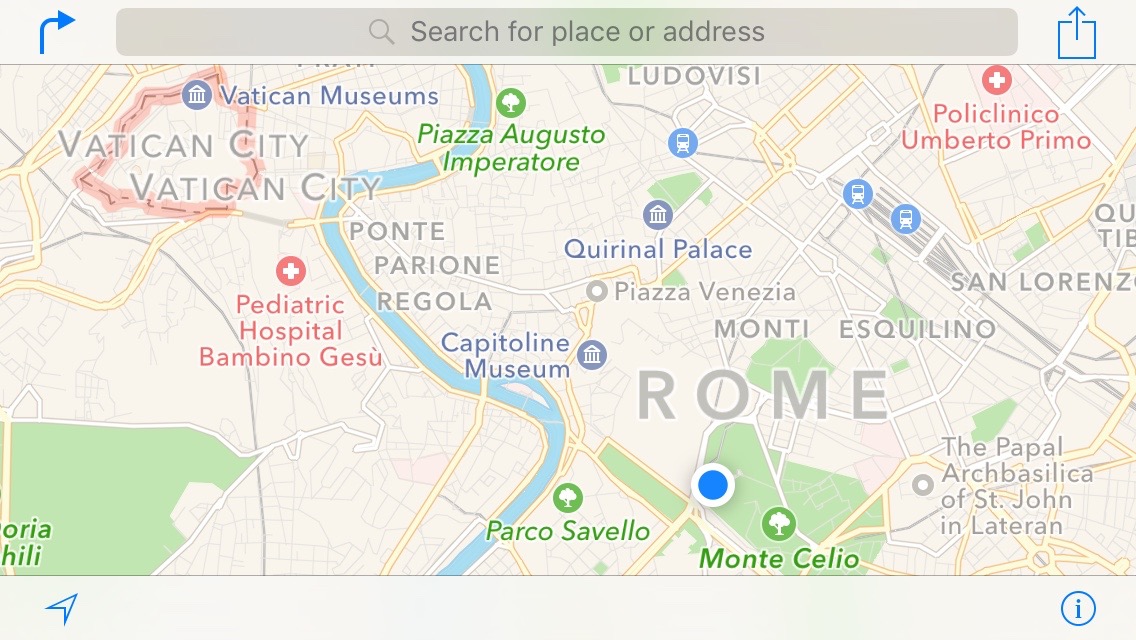
A big wind blew through Rome last night and brought with it thunder, lightening and a good little rainstorm. The breeze has not stopped blowing all day, thanks be to God, so things have cooled down considerably. We got let out early today so I just had another long walk around the Forum and up Via Cavour to the Church of St. Mary of the Martyrs and Angels again, and then around, finding new alleys and ways back home.
My usual daily walk. The big blue dot is San Gregorio.


This was the first official day of the Congress. We are about 300 in all, I think. I saw a lot of familiar faces today, the abbots and priors from America for the most part. Our meeting space in the church felt even more like the Second Vatican Council, with all the simultaneous translators set up in their booths and the Book of the Gospels enshrined in the middle of the nave. Abbot Primate Notker Wolf began the day, after we sang Terce together (we never miss any of the canonical hours, and wow, is it ever an impressive sound, a chorus of men well-acquainted with the Gregorian chants). He spoke for almost an hour, a review of his mandate, the challenges and the accomplishments. He is very much and can-do kind of guy. I think he has been criticized for not being enough of a spiritual leader (I have heard that myself), and he must have been addressing that head-on when he said that his spirituality was nel fare–in doing. Nevertheless he has been very popular, very well travelled and very well conversant in several languages. As a matter of fact he delivered his short homily at Mass today in five languages!

Then the rest of the day was given to reports from the various congregations. That was interesting, to actually get a first hand acquaintance with the congregations from all over the world. We Camaldolese are not the smallest, by the way: the Slavic Congregation has only 30 monks! Every congregation was asked to prepare 3 questions (which somehow never made it to the American Camaldolese…): the five desired qualities of the next Abbot Primate, the five challenges and the five ways we can help him. Most of the answers were similar and what one might expect: ease with languages, capacity with finances (which came up a lot!), leadership, support of Sant’Anselmo, unity of the confederation, the challenge of diminishing numbers and fragile communities. I was impressed to hear that AIM and MID came up often––Alliance for International Monasticism, which aids monastics in developing countries (our Emanuele Bargellini, now in Brazil, is active with them) and Monastic Interreligious Dialogue, on whose board I have served for five years now.

One abbot from South America said two things that were very interesting. He said that he had heard from an Italian about Pope Francis that “He speaks Italian in a way that only Spanish speakers understand,” and he didn’t mean linguistically, but culturally. I assume he was referring specifically to the southern hemisphere. He also said, “The Holy Spirit has already chosen a new Abbot Primate. We must now discern who that is.” But my favorite intervento came from our own Prior General Alessandro, who was among the last few to speak. (Some of the monks around me thought he was an Olivetan and I quickly disabused them of that mistake. The Olivetan Abbot General, Diego, for some reason, was actually not here. I really wanted to meet him since we are in an agreement with him over the Monastery of the Risen Christ.) Alessandro said that all the qualities mentioned were fine, but we need more than a “manager.” (He used the English word.) We need a profeta–a prophet. Much like what he said to us when he was in California in May, he said it is important for monasticism to be significativo nella vita della Chiesa–meaningful in the life of the Church again. He and Gianni Giacomelli from Fonte Avellana and I had only spoken briefly before, but both Gianni and I had mentioned the situation with migration, and inter-cultural and well as inter-religious dialogue (“welcoming the stranger”), both of which Alessandro also mentioned. He spoke about having a charismatic leader in the New Testament sense, and of us needing a grande trasformazione. We nominated Abbot Gregory Polan of Conception in Missouri, who was the only one to get nominated by every single speaker, and Abbot Bernard Lorin of Maredsou in Belgium, who I do not know but of whom Gianni and Alessandro speak highly. I hope to meet him tomorrow. The smart money is on Gregory, who is a good friend of ours. Abbot Richard Yeo of the EBC also got several nominations, as did Elias Lorenzo from New Jersey, the newly elected president of the American Cassinese Congregation. I was surprised by the latter not realizing he was so well known and highly regarded. At the very end a Benedictine woman from the CIB (the confederation of Benedictine women, consisting of 14,000) spoke. Though not voting members, the Abbot Primate is also theirs and it was mentioned many times how important it was to keep alive a strong bond with the women. She was an American and spoke with what I think of as a typical American frankness; she ended by saying, “We did not come up the name of any woman or man that we would like to nominate for the office of Abbot Primate,” which took a while to translate and decipher, but did get a pretty good reception.

Another sculpture from the Certosa.
I turned to Abbot Lawrence of Shawnee Oklahoma after Alessandro spoke and said, “That’s my boy!” I think he really got peoples’ attention. During my afternoon walk I thought over and over again what it might mean for Christian monasticism to be prophetic. I will continue to ponder it, I suppose, but I came up with these things: simplicity of life in a counter-cultural sort of way, including a proper relationship to consumerism and technology; I do believe the inter-religious and inter-cultural elements are of prime importance; tapping into the great desire for contemplative practice and its transformative power; our relationship to the environment, global warming and stewardship of earths riches; and of course I want to add into that integral spirituality, the new asceticism that goes with a new depth anthropology.

Sometimes I must admit that with my role in administration at New Camaldoli I feel as if even my energy for those things is low, and that saddens me, but I am praying for a boost, an inspiration. I certainly don’t want to be merely a functionary keeping the bills paid and the trains running on time. We don’t need more managers; we need prophets! Our very life ought to be a prophetic witness.

Now, off to meditate. Good place to start the transformation.

Monday, September 5, 2016

saluti da Roma


The brothers back home were gracious enough to allow me a six-week mini-sabbatical working vacation, a little pause at the midpoint of my six year term as prior. From here I will be traveling to New Zealand, Australia, Singapore/Malaysia, mostly doing a few retreats and a little retreating myself. I’ve got just a bit of a yen to write again since I am on the road, so I’ve found my old blog (I had forgotten the address!), and we shall see what happens.

Saturday, 3 Sept.

I arrived safe and sound in Rome Friday morning. I was relayed by Jordan to San Jose where my friend John brought me the rest of the way up to my Euro hotel in Redwood City Wednesday PM. It was a very cool little inexpensive place, but I don't think I slept a wink all night. I’m not sure if it was the excitement about the trip or too much tea. At any rate, that plus not sleeping very much during the 16+ hours of flying, it was almost like a trip to India: I was so tired when I got here that I slept all through the night (nine hours!) and hoped that I had already overcome the jet lag. (I hadn’t quite.)

I had a good long walk Friday afternoon and another this morning, picked up all my supplies (my favorite Italian magazine, a book on Taoism in Italian, new sunglasses and a new shirt––yes, its grey but it’s a polo (Favored style of my Italian confreres), not a T-shirt, that shows some creativity, no?), and then just hung out at Roma Termini for a while just because I like it there. It feels so good just be on my own for a few weeks. I stopped in at the church of Santa Maria degli Angeli e dei Martiri (Saint Mary of the Angels and Martyrs) on my way home. I thought I had never seen it before but afterward I remember my friend Stefano Rossi taking me there some years ago, his favorite spot. It’s a former Certosa-Charterhouse of the Carthusians near the historic baths of Diocletian. The church itself is rather typical Roman, but its unique feature is a small pinhole in the roof, whose light falls on a big zodiac calendar each day to mark the dates in the floor.  Besides the famous painting of St. Sebastian that is there, there were a few beautiful modern paintings and sculptures, one striking one of the head of John the Baptist.
 
It’s hot hot hot here in Rome still (feragosto-the summer break time, though there are lots of tourists) and sticky, especially up here on the top floor of San Gregorio, where I am staying. Our monastery shares space with the Missionaries of Charity––soon-to-be-Saint Teresa of Calcutta’s congregation––so there has been a steady crowd of people outside, and they are expecting a over 100,000 people in St Peter's Square tomorrow for the canonization.

* * *

I had to check in to the Congress of Abbots already Saturday night, an early session for newcomers. (Even though three years a prior, this is my first Congress.) I have not spent much time at Sant’Anselmo, the Benedictine University where the Congress is being held, on the Aventine right up from our Camaldolese nuns’ monastery, Sant’Antonio, and the ancient beautiful Dominican church of Santa Sabina. It’s a beautiful very clean and well-ordered campus. I was put somewhat at my own ease to realize that for many of us this would be our first real experience both of Sant’Anselmo and the Congress, so I was not the only one feeling a little spaesato (out of place). It certainly was fascinating to see and meet monks from literally all over the world, many Asians and Africans as well as from all over Europe and the southern hemisphere of the Americas. It is jarring sometimes to note just how informal we Camaldolese are in regards to a lot of the OSB world. (Our monks are the only students here, for instance, who don’t wear their habit to classes.) After aperitifs we had Vespers, all in Latin, Gregorian chant, and then an ample dinner was served. They are undoubtedly accustomed to feeding large crowds with much to choose from. And that was the end of it. I enjoy the walk to and fro; it only takes about twenty minutes across the bustling Circo Massimo and may be the only real exercise I get during these weeks.

Sunday was a bigger day. Departing at 7:30 AM from Sant’Anselmo we were taken for a day at Monte Cassino. It is close to Naples, about a two-hour bus ride. It is a massive impressive place that has a storied history. I’ll quote here from my homily (if I may) of this last Feast of Benedict: “There were several pivotal moments in the life of Saint Benedict. The way Saint Gregory the Great lays it out, one significant one was when Benedict left the remote Anio Valley where he had lived as a hermit for three years in the sacro speco near Subiaco and also had his first experiences as an abbot, and moved up to Monte Cassino, a plateau that can be seen from very far away.” I think I’ll re-post that homily here on this site (it’s on the Hermitage blog already, it will appear before this one). It is interesting for me even to look back on it now after having been to Monte Cassino and now attending the Congress.

The ancient part of the story is wonderful and I obviously learned more about the place being there. Benedict found and old temple to Apollo there, which he didn’t destroy but in a sense “baptized.” There was also an old Roman tower which is where Benedict had his cell and from which he had his famous vision which Gregory the Great writes about in his Dialogues. (Gregory actually mentions it twice, once in the life of Benedict and another time in Dialogue 4). This is right after his twin sister Scholastica has died, and both times Gregory mentions it, it is in connection with the death of Germanus the bishop of Capua.

In the dead of the night he suddenly beheld a flood of light shining down from above more brilliant than the sun, and with it every trace of darkness cleared away… According to his own description, the whole world was gathered up before his eyes in what appeared to be a single ray of light.

Part of our tour was to go down into the depths of existing structure and see everything that has been excavated, particularly after the destruction during World War II.

Monte Cassino after the bombing.
And that, of course, is the other part of the place’s history that is perhaps even better known in this day and age––the famous Battle of Monte Cassino of 1944. The Americans, mistakenly as it turned out, thought that the Germans were encamped there and bombed it to almost total destruction. The sad irony was that the Germans were able to occupy the ruins after the bombing, and the spot was only secured later by the Polish army, thousands of whom died and are buried there near the abbey.

I forget how much (perhaps especially in Europe? In Italy?) Benedictine monasticism gets associated with Gregorian chant and “traditional” liturgy. The first thing on our program was Mass. It was quite high church, Abbot Donato presiding in magnificent vesture, almost all in Latin except for the readings and homily. The Eucharistic Prayer as done facing “in the same direction as the people” (ad orientes). The music (again Gregorian) for the most part was executed by two monks and the exceptional organist. Those of us who chose not to be vested were seated in the choir, which was behind the high altar and so could see or hear almost nothing. It was all done very well, but my gosh, what a different world from Big Sur!

There are only eight monks there (at least as I counted) though it is a huge monastery. They treated us to a wonderful pranzo in the enormous refectory, and somehow I got places at the Abbot’s table (though on the very end). He speaks beautiful English (Oxford educated, I believe). And then we had a tour of the museum, sang Vespers with the monks and headed back home, not arriving back in Rome until 7:00. I was glad to get home to San Gregorio. By this time Don Alessandro had arrived and they were just sitting down to dinner, so I was greeted warmly and very happy to be back in the warm environs of a Camaldolese community. After dinner I couldn’t wait to get my habit off, throw on my shorts and go for a long walk (and some gelato) in the cool Roman evening.

* * *   

Today was our first morning of real conferences, four of them, all held in nave of the church at Sant’Anselmo, chairs set up on either side in choir style. (It reminded me vaguely of Vatican II!) There are also booths set up for simultaneous translators––English, French, German, French, Italian, Spanish. It must have been easier when everyone knew, or faked their way through, Latin. The first three sessions were pretty informative, Abbot Richard Yeo, who is one of the candidates for the next Abbot Primate, explained the Benedictine Confederation. I learned that we Camaldolese along with the Vallombrosians, the Sylvestrines and the Olivetans were the last congregations to join the Confederation, and that the Camaldolese of Monte Corona along with the Cistercians and the Reformed Cistercians were the only ones was not to accept the invitation to join. Then the outgoing prior of Sant’Anselmo, Elias Lorenzo, who is also a possible candidate but was just elected Abbot President of the American Cassinese Congregation, gave us a good explanation of Sant’Anselmo itself. It is made up of three distinct but interwoven communities––the Benedictine Curia, the community of students and faculty (the College) and the university itself (the Athenaeum). Then Abbot Placid Solari gave us quite a good history of the Athenaeum itself, starting with its inception as a school for the monks of San Paulo Fuori Muri–St. Paul Outside-the-Walls back in 1687, its demise after the Napoleonic Suppression and its resurrection under Leo XIII, who also mandated the Benedictine Confederation. The last talk was painful, all about juridical rights and finances, and I felt sorry for poor Abbot Bruno Malfer, who spoke in German to have to deliver it last after a long morning. (He also is a candidate, I’m told, but a bit of a dark horse.) I listened to his conference in the Italian translation just to keep myself entertained.

That’s all for now. We begin in earnest tomorrow and we shall see if I have anything fit to share.

Benedict: From the Valley to the High Plateau

This is a reprint and a slight re-working of a homily I gave for the feast of St. Benedict this year, July 11, that seemed apropos to re-offer as I head into this Congress of Abbots.

* * * 

I’d probably shouldn’t say (or write) this in public, but I feel like we Camaldolese, especially we American Camaldolese, have always had a sort of ambivalent relationship with the Benedictine Confederation to which we belong now since 1964 (as one untimely born, as St. Paul might say) though we have been under the Rule since our origins. This is also in spite of the fact that we are the oldest surviving Benedictine reform and congregation. (We are, I am told, the only congregation who dared to add extra initials to the sacred OSB––OSB Cam., indeed!) And because of that ambivalence, I feel like we unfortunately sometimes only have a kind of grudging respect for the great Saint Benedict, patriarch of Western monasticism. Since my time as prior, while recognizing the uniqueness of the Camaldolese charism and particularly of a Camaldolese hermitage such as New Camaldoli, I have tried to emphasize the universal evangelical monastic values that are embedded in Benedict’s Rule for Monks, and use those underlying values to understand why our Holy Father Romuald left us securely with the Benedictine container to hold our Camaldolese energy.

There were several pivotal moments in the life of Saint Benedict. The way Saint Gregory the Great lays it out, one significant one was when Benedict left the remote Anio Valley where he had lived as a hermit for three years in the sacro speco near Subiaco and also had his first experiences as an abbot, and moved up to Monte Cassino, a plateau that can be seen from very far away. Some would suggest that this move from the valley to the high plateau had a symbolic character. As Pope Emeritus Benedict wrote, in his wonderful essay on his namesake, a hidden monastic life has its own reason for existence (it’s own raison d’etre), but a monastery, a monastic community, has another one, a more public purpose both for and in the life of the Church, and for and in society, the purpose of giving “visibility to the faith as a force of life.” As Abbot Jeremy Driscoll says, this is our evangelization as monks––our life itself is an evangelizing word. And that’s what the Rule is, and the Benedictine heritage in general: faith as a full force of life: “I believe this and so I live like this.”

Take a quick look at the late fifth/early sixth centuries: the Roman Empire had officially come to an end when Romulus, the last emperor, was deposed in 476 by the barbarian leader, Odoacer, who himself was later overthrown by Theodoric the king of the Ostrogoths. And now Benedict (who is born around 478) is watching the collapse of the entire Roman civilization as the barbarian tribes begin to dismember an empire that was “already seriously weakened from within by misgovernment and oppressive taxation, and scourged by famine and pestilence.” In Gaul, the northern provinces are being sacked by barbarian invaders; the Vandals are spreading pillage and terror in Africa; Italy is prey to the Goths, the Huns and the Vandals.[i] Monastic life in various forms is holding on, extant throughout Italy and other parts of Europe, including a widespread hermit tradition. Fortunately the breakdown of order in society and all the pillage and destruction didn’t destroy monastic life. On the contrary, what it tended to do instead was draw monks out of their isolation and drew them to band together more in communities. There were still lots of hermits, but this is when more communal (cenobitic) life grew in popularity.[ii] It’s not much different 50 years after Benedict’s death when Gregory the Great is writing his Life and setting up Saint Benedict as a model. The Roman Empire was in the last stages of collapsing by then, the Emperor had abdicated, Rome was infected with famine and pestilence, floods and earthquakes, and the Greeks and barbarians were invading.

In some way Pope Benedict did something similar to what Pope Gregory the Great did in his “Life of Benedict” in the Dialogues: he set Benedict up as a paradigm, someone with a solution for what he saw as troubled times in Europe. Pope Benedict’s memory of course is such that he speaks with the authority of someone having had a front row seat in history. He is speaking of Europe only recently emerged from “a century that was deeply wounded by two world wars and the collapse of the great ideologies, [which were] now revealed as tragic utopias.” He wrote, “Europe today is in search of its own identity. Of course, in order to create new and lasting unity, political, economic, and juridical instruments are important; but it is also necessary to awaken an ethical and spiritual renewal that draws on the Christian roots of the continent.” Without this “vital sap,” he says––without ethical and spiritual renewal––we are exposed to the danger of succumbing to the ancient temptation of seeking to redeem ourselves by ourselves.[iii]

The ancient temptation of seeking to redeem ourselves by ourselves… This is the problem with ideologies and even of philosophies: they can give a rational outline of what we think should be, but in some way, just like the Law itself, as St. Paul rails against it, philosophies and ideologies do not have any power. As Etienne Gilson wrote about Saint Augustine and his being influenced by the Neo-Platonist Plotinus, for instance, we shouldn’t confuse adhesion with conversion, that is adhesion to a philosophy versus conversion to spiritual renewal. “That Plotinus should advise us to rise above sense, to rule our passions, and to adhere to God, that is all well and good! But will Plotinus give us the strength to follow this excellent advice?”[iv] And he appeals to Romans 7: We do not do what we want but what we hate––in this case, we do not always, we can’t always follow what we think is the right thing to do, the way to live; we can’t count on our ideologies and philosophies to save us. There has to be something more to give us the strength. And so we heard the famous phrase from John 15 as our Gospel passage on the feast of Saint Benedict: ‘Just as the branch cannot bear fruit by itself unless it abides in me, neither can you unless you abide in me.’ And so St. Paul says, Who will save me? Thanks be to God through Jesus Christ our Lord!

And so for Benedict: the experience of God came first; without an experience of God we may have the knowledge but we do not have the strength. Philosophers and idealogues rationally figure things out and then hope to climb that ladder to union with God or some other utopia. But monastic life isn’t based on an ideology or a philosophy. Monks start out with union with God and then try to make sense of it; but even more importantly monks at their best build a life around that experience of the Divine, to protect it, to nurture it, to deepen that experience, then to pass it on and share it. What Robert Taft says about ritual applies here: Our life is ideology and experience in action. Our philosophy is the way we live. I think of the desert fathers; their response to a query might very well be, “Come and live with me, see what I do, see how I live.” Or Gandhi: the story I heard was that he was trying to keep silence during his journeys from place to place when he visited England, but the reporters kept chasing him, even as he boarded the train. One of them yelled to him, “Mr. Gandhi, what is your message?” And Gandhi-ji wrote on a little piece of paper and held it up to the window of the train, “My life is my message.”

From the valley of Anio to the high plateau… “Benedict’s spirituality was not an interiority [that was] removed from reality. In the midst of all the anxiety and confusion of his day, he lived under God’s gaze and in this very way never lost sight of the duties of daily life” and the duties of the human person with his or her very practical needs. Seeing God, Benedict understood the reality of the human person and humanity’s mission.[v] That’s why he said that his monastery was a “school of charity.”

There is one place where I respectfully disagree with the great Thomas Merton; during that last conference he gave in Bangkok, Merton told a story about a Tibetan lama who escaped his country to save his life. Before leaving, when still faced with the decision of whether or not to go, he sent a message to an abbot friend, asking: “What do we do?” The answer that came back was: “From now on, Brother, everyone stands on his own feet.” That doesn’t completely work for me. If he meant that we can’t rely on social, political, economic forces to shore us up, that’s fine. But if there is anything we have to model in the name of Jesus it’s that, just as the monks gathered in communities as the Roman Empire collapsed and offered an alternative society, from now on we have to take care of each other.

And so, what are we facing now in 2016, and what is our response, our solution, what is the alternative that we are proposing? In the face of domestic and foreign terrorism––from Columbine and Sandy Hook through 9/11 and ISIS; in a day and age of “Black Lives Matter” and policemen being gunned down; in a political arena that is as ideologically polarized as anything we’ve ever seen and an election cycle that one Republican senator described the other day as “a dumpster fire”; with a global immigration crisis due to warring states... Political, economic, and juridical instruments are important; but it is also necessary to awaken an ethical and spiritual renewal. That’s the vital sap. We sons of Benedict and Romuald have been placed on a high plateau, a city built on a hill, responding to the call of the Gospel and being an evangelizing word by how we live individually and communally, offering an example of faith as a full force of life.


[i] RB 80, 65-66.
[ii] RB 80, 67.
[iii] Great Christian Thinkers, 129.
[iv] The Spirit of Medieval Philosophy, 30.
[v] Great Christian Thinkers, 127.

Friday, February 1, 2013

the four oratories

The true servants of God sits in the midst of their fellows,
and rise and eat and sleep and marry
and buy and sell and give and take in bazaars
and spend the days with other people,
and yet never forget God even for a single moment.
(Abu Sa’id Ibn Abi’l-Khayr)
For some years now, inspired by Fr Bede Griffiths’ teaching about the spirit, soul and body, and by Sri Aurobindo of India and more recently folks like Ken Wilber, I’ve been interested in trying to articulate a Christian version of what is called “integral spirituality,” a spirituality that reverences and develops the whole person: the body––the physical being; the soul––the intellectual, creative and emotional aspects; as well as the so-called spiritual side of the person. Yesterday we celebrated the feast of Saint John Bosco, an 18th century priest who dedicated his life to ministering to poor and homeless boys. (In this day and age of so much breach of fiduciary trust, it’s consoling to remember that some Catholic priests got it right.) He is also the founder of the congregation of Salesians, who run a grade school and high school up in Santa Cruz County near where I lived the past ten years. I had many occasions to work for and with them; as a matter of fact some of my best friends are from those schools, and so I grew to love Don Bosco and his unique approach to education. But one of the things that I like the best about Don Bosco is his teaching about “the four oratories,” the four places of prayer––cortile, casa, scuola, chiesa–playground, home, school, and church––which winds up being a pretty good example of exactly what I have been after. He taught the not just the church, but also the playground, the home and the classroom should all be considered to be oratories, places of prayer. I was thinking how much everyone (even, maybe especially, monks!) could take a lesson from this beautiful teaching.

Cortile really means a “courtyard.” In the Piedmontese region especially, I’m told, where John Bosco was from, houses are built with a kind of an open-air quadrangle court in the middle. But the word usually comes to be translated as “playground.” The playground as oratory; I like that a lot! I gave a talk once at Notre Dame on this same topic, “integral spirituality” from a Christian perspective, but I wanted to give it the subtitle, especially since it was at Notre Dame, “Why is it so far from the gym to the church?” What I mean is that what I have experienced of what competitive sports has become in the West––the behavior, the language, the attitude––the whole ecosystem is pretty different from the kind of environment one hopes to cultivate in a spiritual setting, let alone an oratory. One of the reasons I have been so fascinated with Asian traditions, whether it be from the martial arts or from Yoga or the various Buddhist physical disciplines, is that there usually tends to be a certain attitude of a spiritual presence, or at least a mindful concentration on the unity of the body and mind involved in physical activities, even athletic ones. What would it be like if all our physical activities––even taking a walk, exercise, lifting weights, running––were seen as part of our spiritual practice? Carl Jung thought a new yoga would arise in the West and that it would come specifically out of Christianity. The bigger issue of course is what would it be like if we really understood that caring for our physical being is also an important part of the spiritual life? Since we are an incarnational religion…

I like also that the cortile is outside, because we need to recover more and more our relationship to nature, and understand how symbiotically we are tied to it, and how much our own evolution and survival is tied to that of greater nature. And that this too is an integral part of our spirituality, if for no other reason than that we are stewards, servants of creation.

Between cortile and casa, there is also the issue of work. When I was a young monk I had a tendency to think that my work was something I had to get done so that I could get back to my cell and pray. But at some point my postulant master reminded me that I was supposed to be praying constantly; that’s the goal of the monastic life. This is what we learn from the best of the monastic tradition, or from someone like Bro Laurence of the Resurrection, finding God amid the pots and pans as he wrote about in his classic work The Practice of the Presence of God. Not only ought we pray while work; our work is also meant to be a prayer, and even the laundry room, the kitchen, the garage are all oratories. (I think of our old Bro Emmanuel sprinkling holy water on the tractor.) That’s why in his Rule for Monks St Benedict says that all the tools of the monastery should be treated like the vessels for the altar.

The casa–the home, means to me our emotional and interpersonal development. (This applies to monks and other religious, too. There is a communal aspect of our life and a relational aspect to being human. Our former prior general Don Benedetto, of happy memory, used to say, “Before a man can be a monk, he must be a man!”) There’s a phenomenon spoke of often in contemporary spiritual circles called “spiritual bypassing.” What spiritual bypassing means is that because we are outwardly “spiritual,” we might have the tendency to think we can skip all that messy work of psychological and emotional (i.e., human) development, and just be like angels floating above it all. It doesn’t work that way! We’re not made that way. What if we were to understand that our interpersonal skills, and our emotional and psychosexual growth were all a part of our spiritual life, just as important as saying our prayers? I think this is why even the marriage bed in a Christian tradition is supposed to be viewed as a holy place. We only grow through, with and in relationship––even hermit monks! That’s how God made us.

Of course scuola–school is a symbol of the intellectual life. I love the title of Jean le Clerq’s famous book, The Love of Learning and the Desire for God. It’s one of those book titles that contain the whole message of the book, and that is the monastic tradition at its best. Learning not just for the sake of learning, not for the sake of a degree that will get you a better job, not just to show how smart you are, and certainly not as an escape from the real world, but learning as a valid path to knowledge of God. Yoga calls this jnana marga­–the path of knowledge. The whole person needs to be developed. We don’t leave our intellect behind either, but we reverence it as a part of the ecosystem.

And then finally chiesa­–the church, what we think of as the proper place of prayer. All that has gone before is what we bring to worship; everything from the cortile and the casa and the scuola is what gets collected and offered up in our prayer; everything from the playground, home and school is what is symbolized in the bread and wine that we offer; and everything of our physical, emotional, and intellectual beings is what gets accepted and changed into the Body of Christ, the fullness of the one who fills all in all.

They say that St Romuald wished that he could turn the whole world into a hermitage. In a similar vein, let’s hope that one day we could see the whole world as our oratory.

Wednesday, January 9, 2013

you give them something to eat


Come all you weary who move through the earth.
You've been spurned at fine restaurants and kicked out of church.
Got a couple of loaves sit down at my feet.
Lend me your ears and we'll break bread and eat.
                                                            (Dustin Kensrue)

We’ve been inundated with homilies here the past few weeks during this Christmas season, some of them very good, obviously, but there is a saturation point! I was scheduled to preside yesterday and had decided ahead of time that, especially since I had just preached on Sunday, it was time for everybody to have a day off. But then I saw the gospel of the day: Mark 6:34-44.

Somehow this gospel sums up everything I understand of what it means to be church and to be a Eucharistic people, what the authentic spirit of our missionary activity and apostolate ought to be. During my morning walk/run on the hill I was thinking about what I was going to say and I suddenly remembered that it was exactly this week 10 years ago that all hell broke loose in my head. I was still living here with the community at the time. The sex scandal had just broken in Boston, followed by the very inept handling of it on the part of the hierarchy and some very inopportune statements from the Vatican. I heard Bruno preach on this very gospel that week, and the next day I attended our Four Winds inter-religious Gathering down at Esalen Institute. There were some other issues going on with community and in my own life at the time as well, and something about the combination of those three things set off this perfect storm of agitation and discontent. Thursday of that week I had what we call a “desert day,” 36 hours of solitude. For some reason I had a weight bench in my cell at the time and some dumbbells. And I remember literally rolling up my sleeves, picking up one of the weights and saying to God, “Okay let’s go. What is it this time?” Looking back, it was clearly that week that was the beginning of my eventually moving out and spending ten years living away from the community in my experimental life up in Santa Cruz.

It starts out with Jesus seeking out the lost ones, Jesus had compassion on them––how I love this line––because they were like sheep without a shepherd. Jesus has compassion on them. How many times I thought of that line walking down Pacific Avenue in Santa Cruz, or on Water Street on my way back from the gym, passing the courthouse and the jail and the AA drop-in house. Jesus was not ever afraid or reluctant to break his solitary ecstatic communion with the Father to go and serve. But it was always specifically to those who were sheep without a shepherd, the lost ones, the little ones. I think even when Jesus says I was sent only to the lost sheep of the house of Israel and tells his disciples too only to go to the lost sheep of the house of Israel (Mt 10:6, 15:24), the accent is on “lost” not on “Israel.” Jesus was sent to all those who get left out, squeezed out, those who fall off the boat, under the radar. It reminded me of a great song by a young singer-songwriter Dustin Kensrue, from the Southern California band Thrice that I quoted above: Jesus went to all those who were “spurned at fine restaurants / and kicked out of church.” I think it’s brilliant to put those two images together, because so many of our churches and religious communities carry much more the spirit of fine dining and polite company, than the company of drunks, tax collectors, lepers and prostitutes.

But after Jesus gets them gathered there and feeds them first on the Word, his good news, he then wants to make that concrete too and feed them actual food too, because peoples’ bodies were always as important to Jesus as their souls. And I think it’s kind of funny that the apostles were going to send them away––again! And when they turn to him he says, You give them something to eat! That’s the line I heard Bruno reiterate several times in that homily ten years ago that went through me like David’s pebble in the forehead of Goliath, or like the opening of a third eye (literally, I felt it hit me right there, between the eyebrows): You give them something to eat! That’s what it means to be a follower of mine––you need to seek out the lost and give them something to eat. And don’t worry if there is going to be enough (they only had five loaves and two fish). This is a great Eucharistic image, abundance. The food just keeps on coming, ‘til in the end there were twelve baskets of broken pieces left over. Generosity breeds generosity.

There’s a great lesson here for us as a church and as a monastic community. How many people get left out of our staid, polite, safe spiritual communities? (How much does this apply to spiritual communities outside of Catholic churches too?) And they are like sheep without a shepherd. We’ll have to answer for that. Because we don’t shepherd them when they are like sheep without a shepherd, because we don’t feed them when they are hungry, they go off to someone else who will feed them. They’ll go off to other churches, ashrams, zendos, Sufi circles, and get fed, and sometimes fed well, because we may be too concerned with preserving some kind of a pure ethic or a pure cult. But they also may go off to places where they get fed poison too! We need to be wary of ourselves. I think this is some of what our new Prior General Don Alessandro Barban was getting at when he spoke to us last year about the “new barbarian invasion” in Europe that so many Europeans and church folks are afraid of, watering down the culture and changing the face of Western civilization and the church. “But we Camaldolese,” he said, “we love the barbarians.”

I love the image at the end of this gospel, the twelve baskets of broken pieces. That’s a great image for the church (maybe also for the monastic choir), “twelve baskets of broken pieces,” broken because we are fragile and wounded; but broken in the positive sense too, broken and passed out as food for the world. I often say I would never dare to change the official words of the Mass (especially now that we have this new translation), but if I could I would change the end too: “Mass is ended––now you go give them something to eat!”

Come all you weary, you cripples, you lame.
I’ll help you along you can lay down your canes.
We’ve got a long way to go but we’ll travel as friends
The light’s growing bright further on further in.

Sunday, January 6, 2013

an epiphany


To be human is to become visible
while carrying what is hidden as a gift to others.
To remember the other world in this world
is to live in your true inheritance.
You are not a troubled guest on this earth,
you are not an accident amidst other accidents
you were invited...
(David Whyte, "What to Remember When Waking")
I’ve been sort of fascinated with this Greek concept of telos, for some time now, especially in my study of other religious traditions. The telos, as I understand it, means the ultimate end, the farthest goal, even beyond the proximate goal: what’s the ultimate end of life? What is the whole purpose of this thing? I always wind up back using the same examples: that the most popular forms of Hinduism, for example, say that the end of our life is for our selves to disappear into the great Self like a drop disappears into the ocean. And Buddhism shifts that a little bit and teaches that there is no self; not only does a human being have no self, there is also no Self of God either. There is just impermanence, just change, and the great release (nirvana) happens when we realize that. That’s the epiphany, you might say, that the Buddha had under the bodhi tree.

So how do Christians describe the telos? I think normally Christians would say that at the end of life our body to dies and our souls go to heaven. We’ve been having a series of lectures from a wonderful scripture scholar Scott Sinclair lately, and he has been addressing just that–-heaven and hell, “the last things.” Scott has mentioned this famous scripture scholar N.T. Wright several times, and Wright says a rather shocking thing. This has a kind of complicated anthropological argument around it that I won’t get into, but Wright says that this talk about a soul needing to be saved so as to go to heaven is hopelessly misleading: the end of Christian life is not for the soul to go to heaven, but for body and soul to be raised together in an eschatological reintegration––that’s what scriptures teach is our share in the resurrection. Or more broadly put, the end of life for the Christian is a new heaven and a new earth. Now, that’s shocking enough, but I think the Fathers of the church put it plainer yet, easier to understand but even more mind-blowing. St Augustine and St Basil, for example, say that the end of Christian life is for us to become God. Somehow even my soul going to heaven pales in comparison. We have an antiphon that we sing every day at evening prayer, which is just a reiteration of St Augustine’s own words––“God became a human child so that every child of Eve might become God…”––, and I always I think our guests are either not listening, or they are taking notes down to report us to the Congregation for the Doctrine of the Faith, because this is mind-blowing stuff that I never heard the priest in my parish say when I was growing up. But St Basil’s words are just as strong: “Through the Spirit we acquire a likeness to God; indeed, we attain what is beyond our most sublime aspirations––we become God.” I like to quote that while holding the Office of Readings in my hand, the official prayer book of the Church, to make sure people know that I am not making this up. And I also hasten to add two things: first, to keep us humble about this, there is a whole lotta emptying and dying that gotta go on in order for us to realize this; and secondly, I have no idea what this means––to become God––, I’m just a parrot echoing words I’ve read. But that may be the real epiphany. Maybe that’s the realization that struck St Thomas Aquinas dumb at the end of his life, or that led St Teresa into ecstasy, our participation in divinity. And I think that’s the epiphany that is supposed to dawn on us in the feast of the Epiphany, too. This feast isn’t just about Jesus. It’s unpacking that for us and showing us a little bit more about it.

The strongest image of this feast is the three wise men coming to visit this child bearing their gifts. They are symbols, of course, of the rest of the world, of spiritual seekers outside of the Hebrew covenant entering the promise, and of the Jewish revelation breaking out of its container. But the uniqueness of this event is not just in their visit. It’s also in the fact that they had their gifts to bring too, and that their gifts were received and accepted. This was an important detail for Abhishiktananda, by the way, in his dealing with Indian spirituality.) They came bringing their treasures and their treasures were received, along with their uncircumcised flesh. And just so, when people come to Christ or come to the church, they don’t have to leave everything of themselves behind nor the treasures that they have found in far-flung lands. Who they are, what they have offer is welcome, because (as St Thomas Aquinas taught) grace builds on nature.

On the other side of it, in spite of the Christmas card images we have of a halo around Jesus’ head, and maybe angels still hovering about, taking naps in the corner, what these men have come to see is nothing that special in one sense––a child, a boy, maybe by this time playing with his toys and making his first words. But this boy, for the moment at least, is a symbol all of humanity. It’s like when you put an ordinary object in an extraordinary surrounding––like a painting in a frame, or an earthenware vessel in display case in a museum, or Abraham Lincoln’s hat on display, or someone we know performing on stage in front of 10,000 people, or St Paul’s letters about leaving his cloak behind somewhere read in the context of a liturgy, or bread and wine placed on an altar––then the epiphany dawns on us: it’s just something normal but it is carrying an extraordinary weight of glory: those swatches of color on a page are a groundbreaking work of art; that clay jar is a pristine example of a breakthrough in function and design; that piece of clothing rested on the body of someone who changed the world; that child I heard practicing the violin for years is able to capture sublime sounds and captivate a huge crowd with them; these letters contain sublime wisdom about the meaning of revelation; this ordinary bread and wine are our link to Jesus who is our link to the Godhead. But the other epiphany about that bread and wine is that before they are symbols of the real presence of Christ, they are supposed to be symbols of the real presence of me, of us. Our ordinary lives are what gets lifted up and accepted––like the gifts of those visitors from the east––and consecrated and divinized and made into the body of Christ, so that “we may share the divinity of Christ who humbled himself to share in our humanity.” And this child: the fullness of divinity dwells in him, this little seemingly ordinary boy.

The Fathers of the church, especially Peter Chrysologus, tie together three epiphanies, the three times Jesus is revealed (and the Eastern church still celebrates it this way), again as we sing in an antiphon: this visit of the magi, the Baptism in the Jordan, and the wedding feast at Cana. The other two both have water in them, and the wedding adds wine, too. I feel a little neglected that we don’t have any liquids in this feast, but we actually do, as at every Mass. First of all there are the waters of baptism; and then (again!) that moment when the priest pours the water into the wine to prepare the gifts for our Eucharist. As if it weren’t enough that these are ordinary gifts from our field and vine, to ensure that we remember we are part of what gets lifted up, pouring that drop of water into the wine: “… may we come to share the divinity of Christ who humbled himself to share in our humanity.” May we pour the drop of water that is our humanity into the ocean of divinity that is Christ, but my drop of water doesn’t disappear––I become the wine and the whole ocean of divinity is somehow contained in each drop, just as our St Peter Damian taught that the whole church is contained in each member. Just as Paul says the fullness of divinity dwelt in Jesus bodily, in the next breath he promises, that you may come to fullness in him, and as John says in his Prologue we receive from his fullness life upon life. That is the whole point of the Word becoming flesh.

When I was younger I remember being involved in all kinds of liturgy planning meetings, and the operative question was always, “What’s the theme of the Mass today?” Or “What’s the theme of today’s readings?” It was usually something like “Faith.” Or, with little kids, “Be nice to everybody.” Along the way I got a little more sophisticated and learned that every Eucharistic celebration is a variation on the same theme; every liturgical celebration is about the Paschal mystery in its fullness, the passion, death, resurrection of Jesus. And then I learned that even to speak about the passion, death and resurrection wasn’t enough, we needed also to add in Jesus’ life and ministry on one end, but even more importantly to always mention, as is in our Eucharistic prayers now, the Ascension and Pentecost. And that last event––Pentecost–– really changes everything because that’s where we, the church, get involved. We also have to go that further step, and realize that every Eucharistic liturgy is about all those events in Jesus’ life plus “What does this have to do with me?” Hans Urs van Balthasar wrote that humanism isn’t naturally Christian humanism; it needs to be rooted in common adoration. But we stop short if we stop at adoration too, even at Christmas, even at the Epiphany. For the Christian, adoration is meant to lead us back to the human being, to imitation and discipleship, and discipleship is meant to lead us to participation, particularly participation in Jesus’ divinity. The ordinary gifts we bring, our very selves, are our gold, frankincense and myrrh that we lay before the Christ child, and they are accepted and lifted up and transubstantiated and made into the Body of Christ.

Let me quote and then paraphrase David Whyte again:

To be human is to become visible
while carrying what is hidden as a gift to others.
To remember the other world in this world
is to live in your true inheritance.

We are not troubled guests on this earth; we are not accidents amidst other accidents. We were invited, called to share in the divinity of Christ who came to share in our humanity. Our closing prayer today prays that “we may perceive with clear sight the mystery in which God has willed us to participate.” May this epiphany dawn on us.